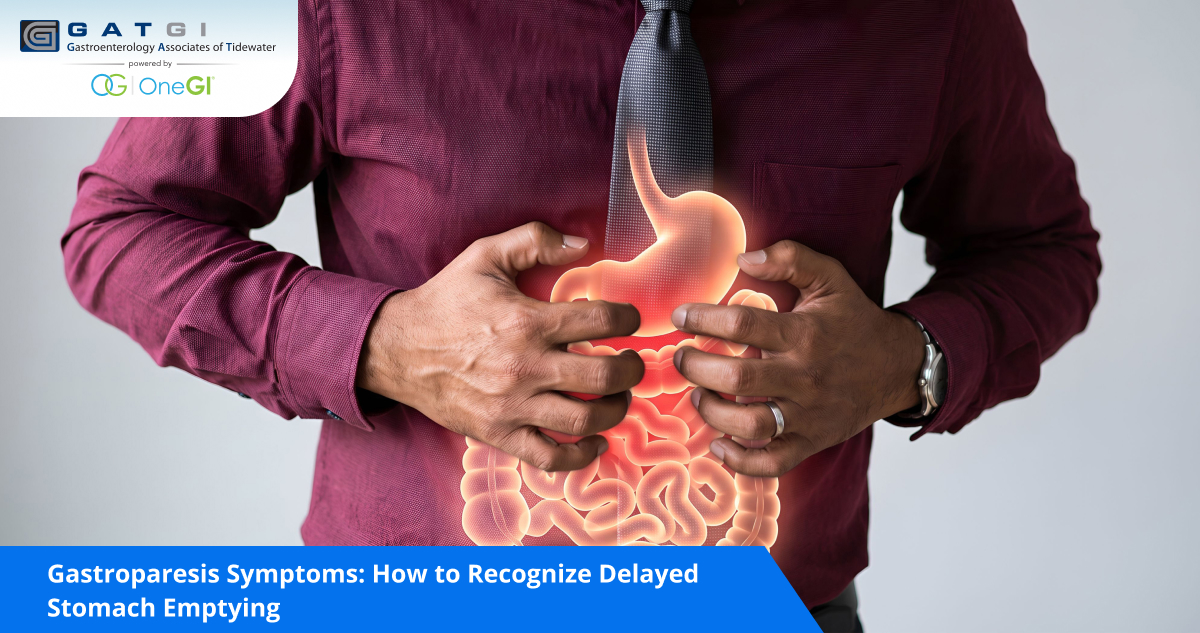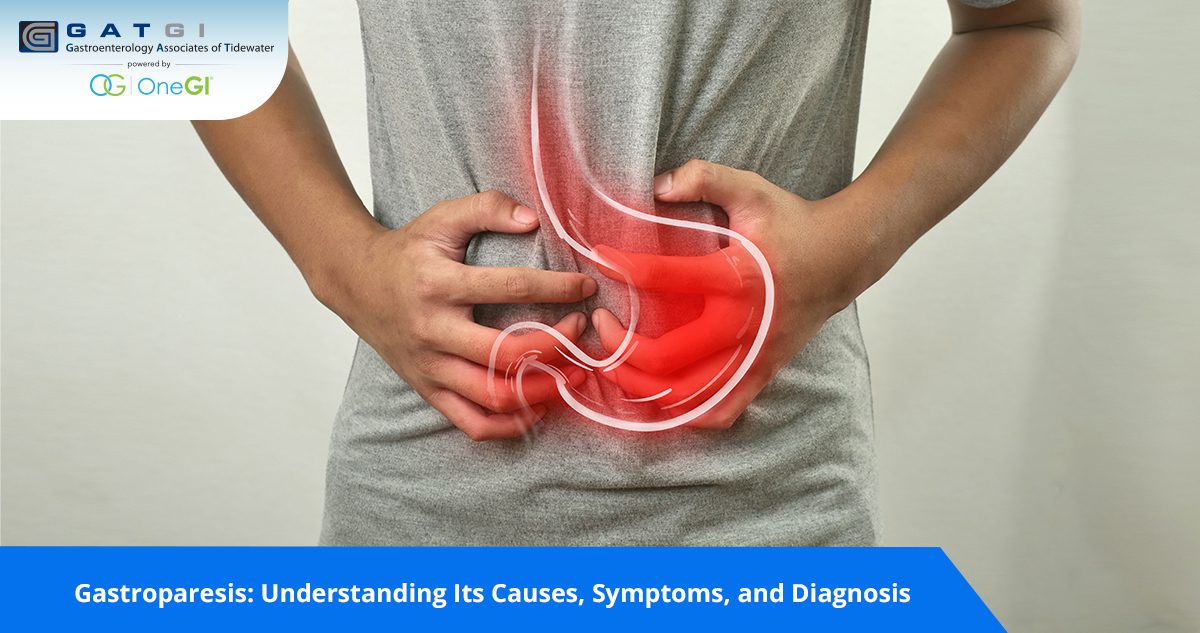
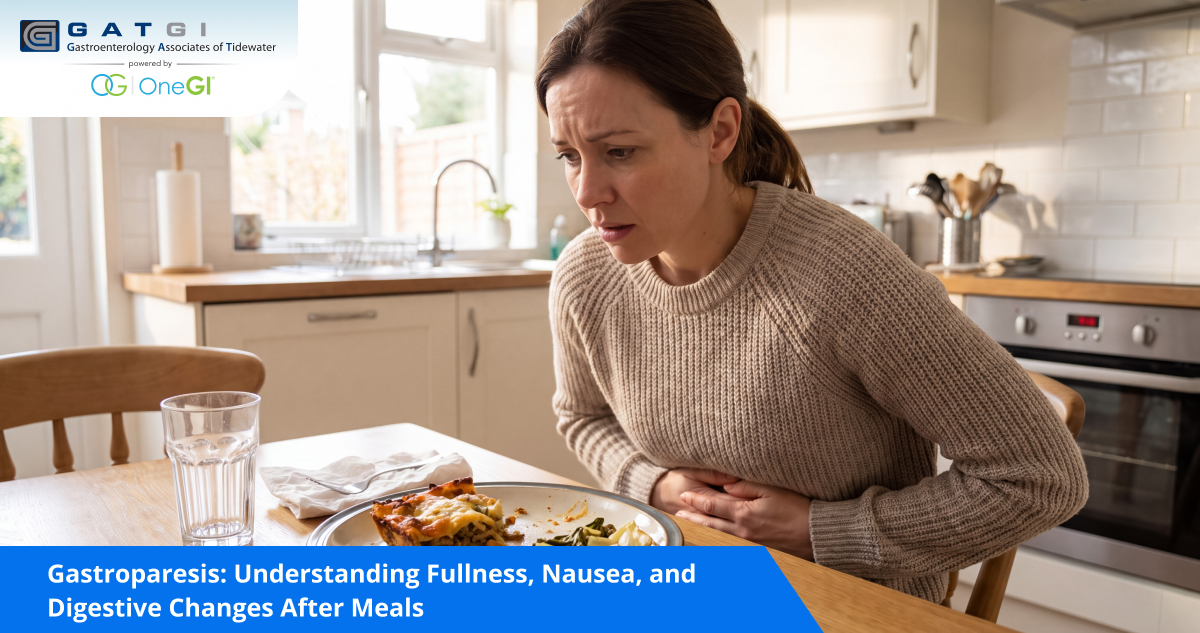
Feeling unusually full after only a few bites or regularly experiencing nausea and bloating after meals can be more than an occasional digestive issue. When these symptoms continue, they may point to a problem with how efficiently the stomach moves food into the small intestine.
One condition associated with these symptoms is gastroparesis, which occurs when stomach emptying is slower than it should be. Because food remains in the stomach longer, people may experience early fullness, prolonged fullness, nausea, bloating, reduced appetite, or abdominal discomfort.
At Gastroenterology Associates of Tidewater (GATGI), understanding the pattern and persistence of digestive symptoms is an important part of determining what may be causing them and whether further evaluation is appropriate.
What Happens in the Stomach When You Have Gastroparesis?
After you eat, muscles in the stomach normally contract to break down food and gradually move it into the small intestine. Nerves help coordinate these contractions so digestion progresses at an appropriate pace.
With gastroparesis, this process becomes slower even though there is no physical blockage preventing food from leaving the stomach. This is often referred to as delayed gastric emptying.
As food remains in the stomach longer than usual, a person may continue to feel full well after a meal or experience nausea, bloating, and other uncomfortable digestive symptoms.
The National Institute of Diabetes and Digestive and Kidney Diseases explains that gastroparesis affects the normal movement of food from the stomach into the small intestine.
What Are Common Signs of Gastroparesis?
Gastroparesis does not necessarily feel the same for everyone. Symptoms can range from relatively mild digestive discomfort to problems that significantly affect eating and nutrition.
Common symptoms can include:
- Becoming full shortly after starting a meal
- Remaining full long after eating
- Nausea, particularly around mealtimes
- Abdominal bloating or distention
- Upper abdominal discomfort
- Poor or reduced appetite
- Vomiting in some individuals
- Difficulty comfortably finishing normal-sized meals
The timing of these symptoms can provide useful information. For example, regularly becoming full after eating only a small amount may be different from occasional fullness after a particularly large meal.
Keeping track of when symptoms happen and whether particular meals seem to trigger them can help when discussing digestive concerns with a gastroenterology provider.
Why Can Gastroparesis Make You Feel Full So Quickly?
Early satiety, or feeling full sooner than expected, is one of the symptoms that may occur when stomach emptying is delayed.
When food remains in the stomach longer, there may be less room for additional food during a meal. As a result, you might feel as though you have eaten a full meal despite consuming a relatively small portion.
This prolonged retention of food can also explain why fullness sometimes continues for hours after eating.
However, early fullness alone does not establish that someone has gastroparesis. Several gastrointestinal conditions can produce similar symptoms, which is why persistent changes should be evaluated rather than self-diagnosed.
Why Can Nausea and Bloating Occur After Eating?
When normal stomach movement slows, food and stomach contents may remain in place longer than expected. This can contribute to uncomfortable pressure, fullness, bloating, and nausea.
Symptoms may become particularly noticeable following meals. Some people notice greater discomfort after larger portions, while others may experience symptoms even after relatively small amounts of food.
Post-meal nausea and bloating are also associated with many other digestive conditions. A gastroenterology evaluation can help distinguish gastroparesis from other potential causes.
What Other Conditions Can Cause Delayed Stomach Emptying?
Gastroparesis can develop when the nerves or muscles involved in stomach movement do not function normally.
Several factors may contribute to this problem, including:
- Diabetes: Long-term changes associated with diabetes can affect nerves involved in digestion.
- Certain medications: Some medicines can slow movement through the stomach.
- Previous digestive surgery: Procedures involving the stomach or nearby structures may sometimes affect normal stomach function.
- Neurologic or systemic conditions: Certain health conditions can influence digestive nerve or muscle activity.
In other cases, no specific underlying cause can be identified. This is known as idiopathic gastroparesis.
Because possible causes vary, reviewing your medical history and medications can be an important part of the diagnostic process.
Are Gastroparesis Symptoms Always the Same?
No. The frequency and severity of symptoms may change over time.
One person might primarily experience early fullness and bloating, while another may be more affected by nausea or difficulty maintaining normal eating habits.
Symptoms can also be influenced by factors such as:
- Meal size
- Types of foods consumed
- Existing medical conditions
- Medications
- Individual differences in digestive function
A symptom diary can sometimes help identify patterns. Consider recording when symptoms begin, what you ate beforehand, approximately how much you ate, and how long the discomfort lasted. Learning more about managing gastroparesis in daily life can also help patients better understand symptom patterns and practical ways to navigate the condition.
How Do Doctors Evaluate Possible Gastroparesis?
Because gastroparesis shares symptoms with several gastrointestinal disorders, diagnosis usually involves more than identifying symptoms alone.
A gastroenterology provider may first ask about:
- How long symptoms have been occurring
- Whether symptoms consistently develop after meals
- How quickly you become full
- Changes in appetite or eating habits
- Existing health conditions
- Current medications
- Previous abdominal or digestive procedures
Depending on the findings, testing may be recommended to assess how efficiently the stomach empties or to rule out other explanations for the symptoms.
The goal is to determine whether delayed gastric emptying is actually present and whether another digestive problem could better explain what you are experiencing.
Can Gastroparesis Affect Eating and Nutrition?
When symptoms regularly interfere with meals, gastroparesis can sometimes make maintaining adequate nutrition more difficult.
For example, someone who repeatedly becomes full after only a few bites may unintentionally eat less. Persistent nausea can also make regular meals challenging.
Over time, significant symptoms may contribute to inadequate calorie or nutrient intake in some patients.
For this reason, persistent symptoms that interfere with eating should be discussed with a healthcare provider. Dietary recommendations should also be individualized rather than based solely on general advice found online.
When Is It Time to See a Gastroenterologist?
Occasional bloating, nausea, or fullness can occur without indicating a chronic digestive condition. The pattern becomes more important when symptoms repeatedly occur or begin affecting everyday life. Digestive symptoms that persist despite diet or lifestyle changes may also be a reason to consider a gastroenterology evaluation.
Consider speaking with a gastroenterology provider if you frequently:
- Feel full after eating very little
- Remain unusually full for hours after meals
- Experience recurring nausea after eating
- Develop persistent or frequent abdominal bloating
- Have difficulty eating normal meals
- Notice digestive symptoms becoming more frequent
- Experience changes in appetite or nutrition
More urgent medical attention may be appropriate for severe or persistent vomiting, significant dehydration, severe abdominal pain, or other concerning symptoms.
Preparing for a Gastroenterology Appointment
Providing specific information about your symptoms can make an evaluation more productive.
Before your appointment, consider noting:
- When the symptoms started
- How frequently they occur
- Whether they happen before, during, or after eating
- Foods or meal sizes that appear to affect symptoms
- Any recent medication changes
- Relevant medical conditions
- Previous digestive procedures or surgeries
You may also want to ask your gastroenterologist whether delayed stomach emptying could explain your symptoms, what testing might be appropriate, and whether dietary changes should be considered while the cause is being evaluated.
Get Help Understanding Persistent Digestive Symptoms
Regularly feeling full after a small amount of food, experiencing nausea following meals, or dealing with persistent bloating deserves attention when it becomes an ongoing pattern.
Gastroparesis is one possible explanation, but these symptoms can occur with several gastrointestinal conditions. Identifying the underlying cause is therefore an important step toward determining appropriate care.
At GATGI, we offer comprehensive evaluation and treatment for persistent gastrointestinal symptoms based on their individual digestive health needs.
If digestive symptoms are interfering with meals or everyday activities, consider scheduling an appointment with a GATGI.
Call 757-547-0798.
Frequently Asked Questions
Can you have gastroparesis without vomiting?
Yes. Not everyone with gastroparesis experiences the same symptoms. Some people may primarily notice early fullness, bloating, nausea, or reduced appetite without frequent vomiting.
Why do I feel full after eating only a few bites?
Feeling full unusually quickly can occur when the stomach does not empty as efficiently as expected. Gastroparesis is one possible cause, but other digestive conditions may produce similar symptoms. Persistent early fullness should be discussed with a healthcare provider.
Does gastroparesis always cause symptoms after meals?
Symptoms are often associated with eating because the condition affects how the stomach processes and moves food. However, the timing, frequency, and severity of symptoms can differ considerably among individuals.
How can a doctor tell if my stomach is emptying too slowly?
A healthcare provider may review your symptoms and medical history and, when appropriate, recommend tests designed to assess how food moves through the stomach. Testing can also help distinguish delayed gastric emptying from other gastrointestinal conditions.
Should I change my diet if I think I have gastroparesis?
It is better to discuss persistent symptoms with a healthcare provider before making significant dietary changes. Dietary recommendations may vary depending on symptom severity, nutritional needs, underlying health conditions, and whether gastroparesis has actually been diagnosed.