News & Blog

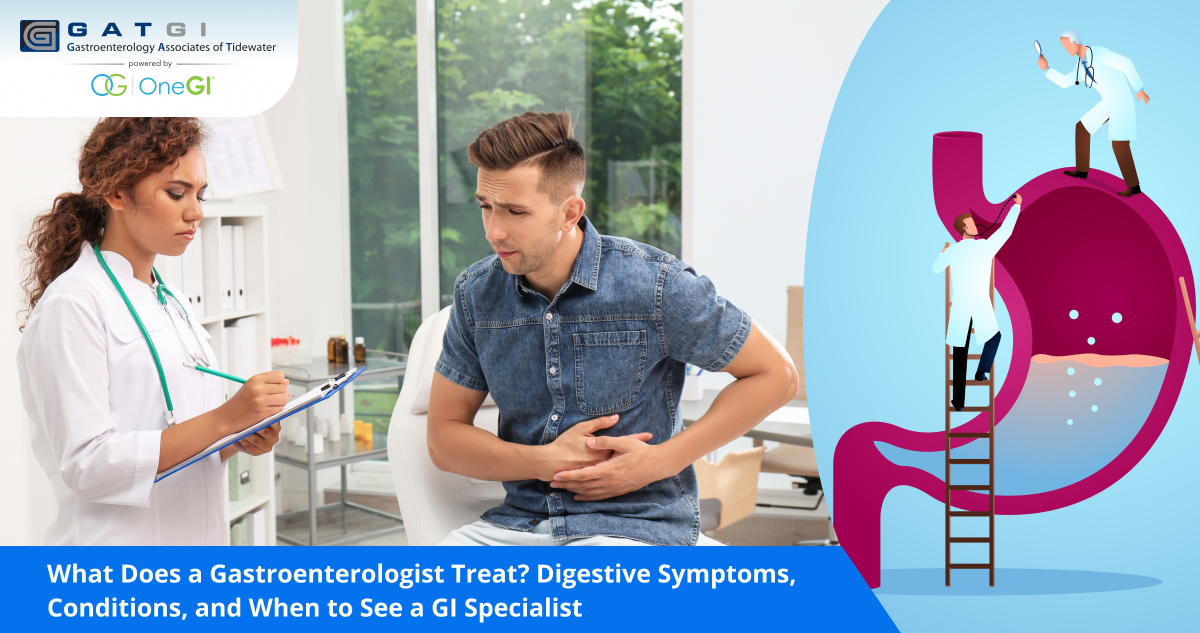
What Does a Gastroenterologist Treat? Digestive Symptoms, Conditions, and When to See a GI Specialist

Digestive symptoms can be confusing. Is occasional heartburn something to worry about? What about bloating that keeps coming back, changes in bowel habits, or abdominal pain that does not seem to go away? Sometimes, digestive symptoms improve with simple changes to your diet or routine. Other times, they may point [...]
September 15th, 2026|Gastroenterology|

Rectal Bleeding, Bloating, or Changes in Bowel Habits? When Your Symptoms Mean It’s Time for a Colonoscopy

Seeing blood after a bowel movement, dealing with bloating that keeps returning, or noticing an unexplained change in your bowel habits can be concerning. While these symptoms can have relatively minor causes, they may also signal a digestive problem that needs further evaluation. A colonoscopy allows a gastroenterologist to examine [...]

September 5th, 2026|Colonoscopy|

Gastroparesis: Understanding Fullness, Nausea, and Digestive Changes After Meals

Feeling unusually full after only a few bites or regularly experiencing nausea and bloating after meals can be more than an occasional digestive issue. When these symptoms continue, they may point to a problem with how efficiently the stomach moves food into the small intestine. One condition associated with these [...]

August 16th, 2026|Gastroparesis|

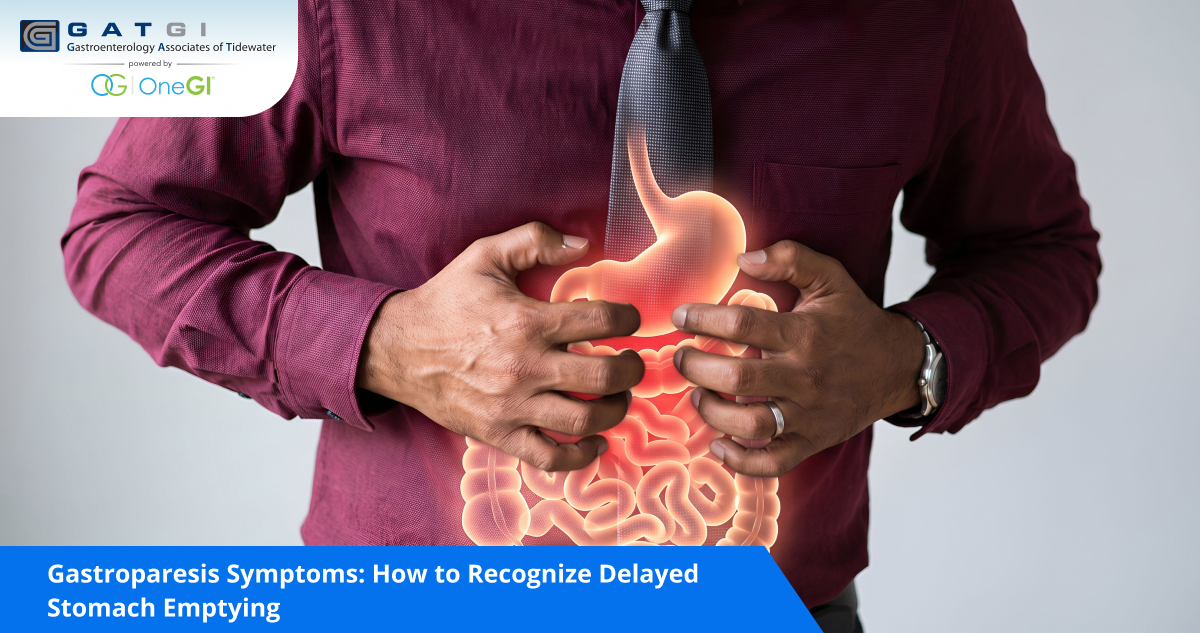
Gastroparesis Symptoms: How to Recognize Delayed Stomach Emptying

Feeling unusually full after only a few bites, experiencing nausea after meals, or noticing persistent upper-abdominal bloating may be more than an occasional digestive issue. When these symptoms happen repeatedly, they can sometimes point to a problem with how quickly the stomach empties. Gastroparesis can cause this pattern. Instead of [...]

August 5th, 2026|Gastroparesis|

Gastrointestinal Disease Treatment: When Symptoms Need More Than Diet Changes

You've cut out dairy, added more fiber, tried the low-FODMAP diet, and you're still dealing with bloating, pain, or irregular bowel movements. So when do digestive issues stop being a diet problem and start being a medical one? Gastrointestinal disease treatment is medical care that diagnoses, manages, and treats digestive [...]

July 21st, 2026|Gastroenterology|

World Hepatitis Day: 7 Signs of Liver Disease You Shouldn’t Ignore

Most people wait for pain before they worry about their liver. But your liver rarely hurts, even when something is seriously wrong. So how do you know something's off before it becomes an emergency? Recognizing liver disease symptoms early gives you options that waiting simply takes away. This guide walks [...]

July 15th, 2026|Gastroenterology|

How AI Is Changing Colon Cancer Detection and Diagnosis

Finding colon cancer early can completely change a person's health outcome. Today, technology is making this happen faster and better than ever before. Artificial Intelligence (AI) is no longer just something from sci-fi movies - it is actively working in modern clinics to help save lives. At Gastroenterology Associates of [...]

June 23rd, 2026|Colon|

Top 7 Gastrointestinal Diseases Men Should Never Ignore

Men often ignore warning signs of internal illness, dismissing chronic abdominal pain or recurrent bloating as a temporary reaction to food. However, persistent digestive changes are rarely random and can frequently signal structural issues. Delaying medical evaluations allows underlying conditions to advance silently. Understanding common GI problems in men and [...]

Can Hepatitis Be Cured? Treatment Options Explained by GI Specialists

If you've been diagnosed with hepatitis, you may be asking yourself: Can this be cured? Or perhaps, what are my options for treatment, and how can I protect my liver? We understand how overwhelming this can feel. As renowned GI doctors in the Chesapeake, VA and Virginia Beach, VA areas, [...]

How Our GI Specialists Help Manage Celiac Disease Long-Term

Celiac disease is more than a reaction to gluten - it is a lifelong autoimmune condition that needs consistent care, guidance, and monitoring. With the right support, patients can reduce symptoms, protect their digestive health, and prevent long-term complications. This article explains the importance of long-term management of celiac disease, [...]

Go to Top