
Discover Gastroenterology Tests and Procedures at Gastroenterology Associates of Tidewater
For more than 40 years, Gastroenterology Associates of Tidewater has provided trusted care for patients needing gastroenterology tests and procedures for a wide range of digestive health concerns.
Our board-certified professionals offer personalized GI care to help diagnose symptoms early, monitor ongoing conditions, and support long-term digestive wellness. Whether your doctor has recommended a gastroenterologist test, you need an endoscopy procedure to evaluate upper digestive symptoms, or you are preparing for a colonoscopy and endoscopy procedure, we are here to make the process clear, comfortable, and focused on your needs.
With advanced technology and a compassionate approach, we help patients better understand their digestive health and the next steps in care.
Procedures
The following are descriptions of some of the procedures that gastroenterologists commonly perform.
Colonoscopy allows your doctor to examine the lining of your large intestine (colon) for abnormalities. This gastroenterologist test is usually done for colon cancer screening and removal of precancerous polyps, but also performed for other reasons. This procedure is performed by inserting a camera, which is a thin, flexible tube as wide as your finger, into the rectum and passing it through the entire colon. In most cases, the physician will give you a sedative and pain medication before the procedure. For this reason, you will need a driver after the procedure.
This test will require a bowel cleansing routine the day before the procedure, which will include a liquid diet and laxatives prescribed by your doctor. The test takes approximately 30 minutes in most cases. You should be able to return to your normal daily activities the following day.
How often this procedure is performed will be based upon many factors, including your family history of colon cancer and findings of the colonoscopy.
Colonoscopy is considered an important gastroenterologist test because of the following reasons:
- Helps detect polyps and other abnormal growths before they become more serious
- Supports early diagnosis of colorectal cancer and other lower GI conditions
- Allows doctors to investigate symptoms such as bleeding, pain, or bowel changes
- Can remove certain polyps during the procedure, reducing future risk
- Gives patients clear answers and supports a more accurate treatment plan
- Plays an important role in preventive digestive care and long-term colon health for many adults
To schedule a colonoscopy, visit our My Colon Screening page.
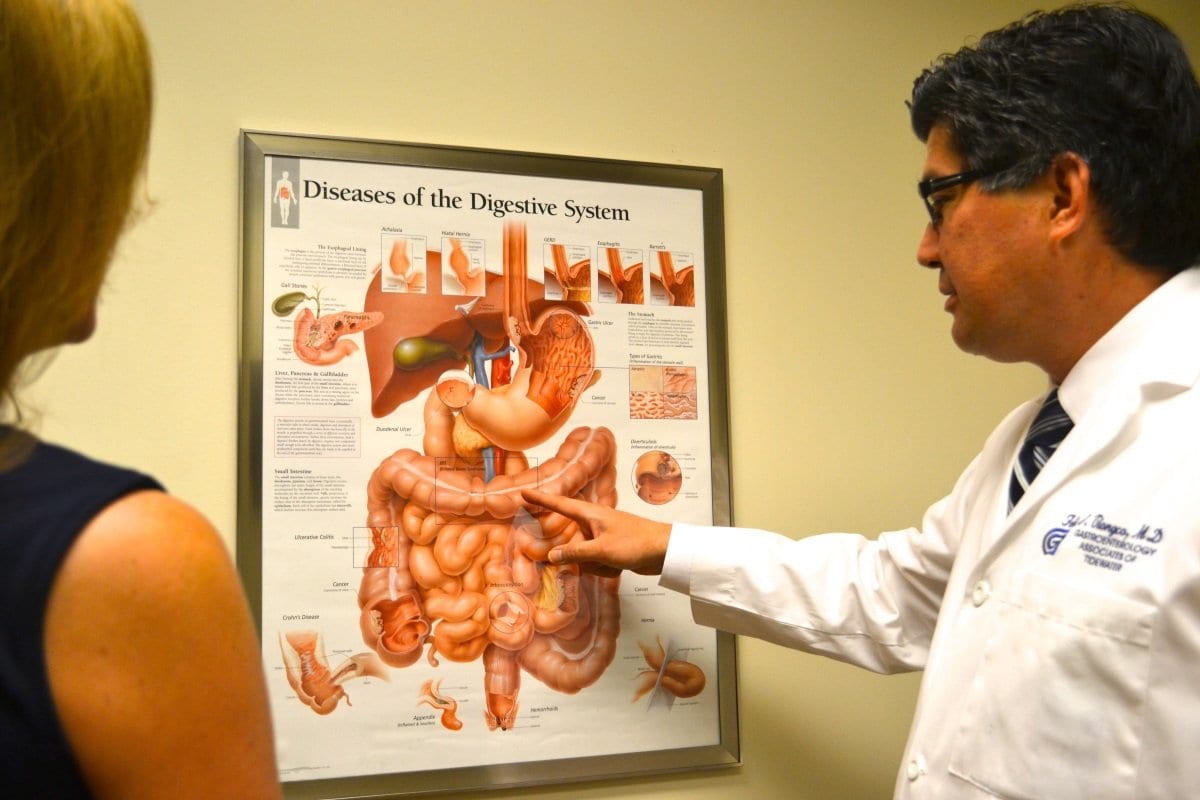
EGD also called an Upper Endoscopy allows your doctor to examine the lining of the upper part of your gastrointestinal tract including the esophagus, stomach and duodenum.
This will be performed by inserting a thin flexible tube with a camera at the end through the mouth. In most cases your doctor will give you a sedative and pain medication prior to the procedure. The procedure does not interfere with breathing and usually lasts about 15 minutes.
This endoscopy procedure is performed for many reasons, including evaluating for reflux (heartburn), ulcers, and swallowing problems. In most cases, you will be able to eat after the procedure and return to normal activities the next day.
Here are the benefits of upper endoscopy:
- Helps identify the cause of upper digestive symptoms without surgery
- Allows early detection of ulcers, inflammation, bleeding, and other concerns
- Supports faster diagnosis and timely treatment planning
- Gives patients clearer answers about symptoms and next steps
- Plays an important role in gastroenterology tests and procedures for accurate digestive evaluation
- Usually involves a short procedure time and a smooth recovery for most patients
Allows your doctor to examine the lining of the small intestine. This part of the gastrointestinal tract is difficult to examine with traditional endoscopy.
You will be given a pill-sized camera to swallow. This pill will take pictures as it moves naturally through the intestine. These pictures will be sent wirelessly to a recorder you will wear on a belt. At the end of the day you will bring the recorder back and the doctor will review these images. The pill camera does not need to be retrieved and will pass with a bowel movement.
The benefits of small bowel capsule are as follow:
- Offers a non-invasive way to examine the small intestine, which is harder to reach with standard scopes
- Helps detect bleeding, inflammation, ulcers, or other small bowel abnormalities
- Supports clearer diagnosis when symptoms remain unexplained after a colonoscopy and endoscopy procedure
- Provides detailed images as the capsule moves naturally through the digestive tract
- Does not require retrieval of the capsule after the test
- Helps doctors make more informed decisions about follow-up care and treatment planning
Endoscopic Retrograde Cholangiopancreatography (ERCP) is a specialized gastroenterologist test for evaluating the bile duct, which drains the liver and gall bladder, and the pancreatic duct, which drains the pancreas.
A thin flexible tube with a camera will be passed to the area of the small intestine where these ducts (or tubes) drain. The doctor will pass special tools through the camera into the these ducts and fill them with contrast in order to view them under x-ray and in some instances passing a fiberoptic camera into the duct. You will be given sedation or possibly anesthetized for this procedure.
This procedure is performed for multiple reasons including gall stones, bile duct blockages, etc. Preparation usually includes fasting prior to the procedure. The length of this procedure depends on many variables, most importantly the reason it is being performed. After this procedure, you will need to have someone available to drive you h
This endoscopy procedure delivers the following benefits:
- Helps diagnose bile duct and pancreatic duct problems with greater accuracy
- Supports evaluation of gallstones, blockages, and other drainage-related concerns
- Allows doctors to both examine and treat certain issues
- Can help relieve symptoms by improving bile or pancreatic duct flow
- Provides detailed imaging with contrast and X-ray guidance
- Supports faster treatment planning and may reduce the need for more invasive surgical procedures
Endoscopic ultrasound, or EUS, is one of the more advanced gastroenterology tests and procedures used to evaluate many different internal organs with detailed imaging.
During this procedure a specialized flexible tube with a camera and an ultrasound probe at the end will be passed to the upper GI tract. The ultrasound imaging will be used to make close detailed evaluations of various organs including pancreas, esophagus, stomach etc. During the procedure abnormalities can be sampled in these organs using a needle under the direction of the ultrasound. This is used for diagnosis and staging of various cancers and other diseases. The procedure is performed under sedation.
Preparation for the procedure depends on the organs being evaluated. The length of the procedure is variable and mainly depends on if any needle biopsies are performed. Some patients will experience a sore throat for a day or two after the procedure. After this procedure, you will need to have someone available to drive you home.
Endoscopic ultrasound is referred to patients because of these benefits:
- Provides detailed imaging of the digestive tract and nearby organs, including the pancreas and stomach
- Helps detect abnormalities that may not appear clearly on standard imaging tests
- Allows tissue sampling during the same procedure for quicker diagnosis
- Supports accurate staging of certain cancers and other serious conditions
- Helps guide treatment planning with more precise information
- Is performed under sedation for greater comfort
- Can reduce the need for more invasive diagnostic procedures in some cases
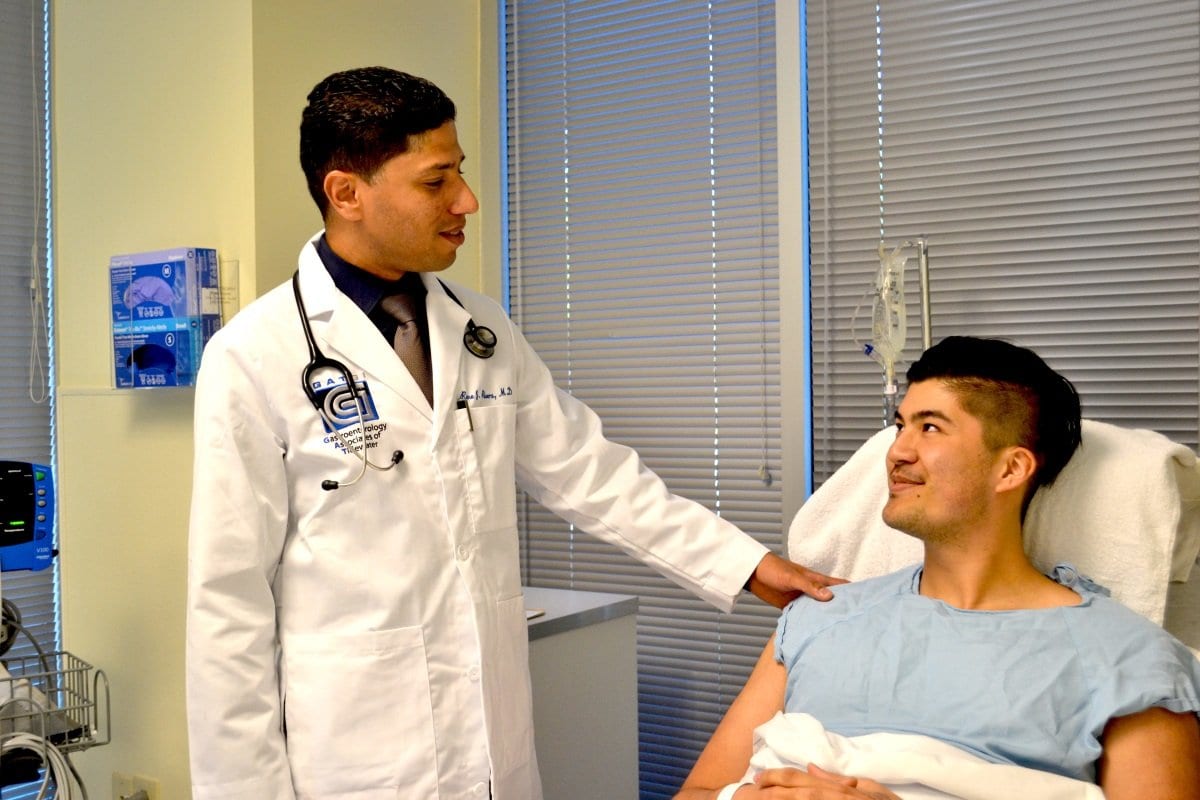
Liver biopsy is an endoscopy procedure for evaluating the liver for various liver diseases and problems.
The procedure usually involves having an ultrasound prior to biopsy for locating the best area to biopsy. The area of location is numbed with novacaine type medication. A needle is then placed through the skin on your right side into the liver about an inch. The procedure usually takes only a few minutes. The patient will be observed for one to two hours after the procedure. Patient can have discomfort in that area for about two days after the biopsy is performed. Results usually take approximately one to two weeks to return.
The benefits of liver biopsy are as follows:
- Helps accurately diagnose liver diseases such as hepatitis, fatty liver, or cirrhosis
- Provides detailed information about liver damage and disease progression
- Supports more personalized treatment planning based on biopsy results
- Acts as an important gastroenterologist test when imaging alone is not enough
- Helps monitor the effectiveness of ongoing liver treatments
- Can detect early-stage conditions before symptoms become severe
- Provides clarity and reassurance for patients by confirming or ruling out serious concerns
For more information on these as well as other gastroenterology test and procedures, please visit the patient information website page provided by the American Society of Gastrointestinal Endoscopy at https://www.asge.org/home/for-patients.