Gastroenterologists play a key role in improving patient-centered care for individuals suffering from gastrointestinal diseases.
This article by GATGI explores how specialized care in gastrointestinal disease treatment enhances patient outcomes, focusing on personalized approaches, effective communication, and advanced medical technologies.
By reading this blog, you’ll gain valuable insights into how gastroenterologists put patients at the heart of their care, ensuring better management and overall well-being. Stay tuned for expert insights on how the future of GI care is being shaped!
What is a Gastroenterologist?
A gastroenterologist is a medical specialist focused on diagnosing and treating disorders related to the digestive system. Initially, they train as general physicians and undergo three years of medical residency.
Afterward, they pursue an additional three years of specialized training in gastroenterology. Upon completing this, they earn a certification that recognizes them as experts in gastrointestinal conditions. This certification also enables them to perform advanced procedures and interpret results that general physicians are not qualified to handle.
What Part of the Body Does a Gastroenterologist Focus On?
A gastroenterologist focuses on the stomach and intestines, as indicated by the name “gastroenterologist”—”gastro” means stomach, “entero” refers to the intestines, and “ologist” means specialist.
While these are the primary organs involved in gastrointestinal diseases, the digestive system also includes the mouth, esophagus, and biliary system. The biliary system, which includes the liver, pancreas, gallbladder, and bile ducts, plays a crucial role in digestion by supplying bile and enzymes. Gastroenterologists treat all these organs.
Why Would You Visit a Gastroenterologist?
If your general physician hasn’t been able to identify or treat your digestive issues effectively, or if you’re already aware of a serious gastrointestinal condition, a gastroenterologist can offer specialized expertise. With advanced training and experience, gastroenterologists can provide more accurate diagnoses, faster identification of problems, and more effective treatment.
Reasons to See a Gastroenterologist:
- Difficulty diagnosing or managing digestive symptoms that haven’t improved with general care.
- Known gastrointestinal conditions require expert care and management.
- More specialized knowledge and advanced training in digestive system diseases.
- Enhanced ability to conduct precise exams, procedures, and research for better treatment outcomes.
What Conditions Do Gastroenterologists Diagnose and Treat?
Gastroenterologists diagnose and treat a wide range of conditions affecting the digestive system, from the stomach and intestines to the liver and pancreas. With specialized knowledge and advanced techniques, they handle both common and complex gastrointestinal issues to improve patients’ quality of life.
Conditions Treated by Gastroenterologists:
-
Gastrointestinal diseases:
- Irritable bowel syndrome (IBS)
- Inflammatory bowel disease (IBD)
- Celiac disease
- Small intestinal bacterial overgrowth (SIBO)
- Food allergies and intolerances
- Stomach ulcers
- Diverticulitis
- Appendicitis
- Colorectal polyps
- Hemorrhoids
-
Esophageal disorders:
- Swallowing difficulties
- Gastroesophageal reflux disease (GERD)
- Esophagitis
- Hiatal hernias
-
Liver diseases:
- Viral hepatitis
- Toxic hepatitis
- Fatty liver disease
- Cirrhosis
-
Pancreatic, biliary, and gallbladder diseases:
- Gallstones
- Cholecystitis
- Pancreatitis
Schedule a gastroenterology appointment in Virginia Beach at GATGI today to learn more about these conditions and get personalized treatment and care.
What Does a Gastroenterologist Do?
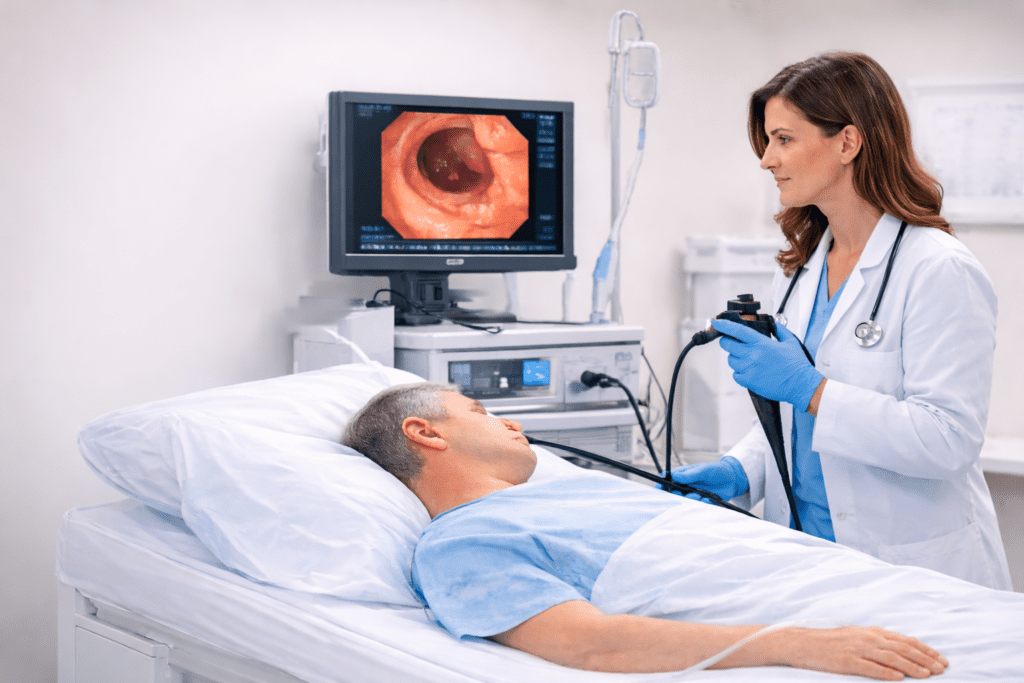
A gastroenterologist typically begins by performing a physical exam, which may involve feeling and listening to your abdominal organs or conducting a rectal exam. If necessary, they may order additional tests, such as blood tests, stool tests, or imaging scans like GI X-rays to get clearer pictures of your organs.
However, when these tests are not enough, gastroenterologists are specially trained in performing endoscopic procedures. These exams use an endoscope, a small camera attached to a long, flexible tube, to examine the inside of your body.
Endoscopic Procedures Include:
- Upper Endoscopy (EGD): Examines the upper GI tract from your throat to your small intestine.
- Enteroscopy: Examines the small intestine in greater detail.
- Colonoscopy: Look at the large intestine or lower GI tract.
- Endoscopic Ultrasound: Combines endoscopy with ultrasound to examine your biliary system.
- ERCP: A specialized upper endoscopy that examines the bile ducts and uses fluoroscopic X-rays.
- Polypectomy: Removal of polyps in the stomach or intestines during endoscopy.
Endoscopy provides gastroenterologists with a detailed view of your internal organs, enabling them to identify issues causing symptoms. Additionally, gastroenterologists can take tissue samples and perform minor procedures using tools passed through the endoscope.
This makes endoscopy a useful step before surgery and often provides sufficient treatment, such as relieving blockages, opening narrowed passages, stopping bleeding, and removing tumors. They can also interpret biopsy results to aid in diagnosis.
Are There Any Special Benefits of Women Gastroenterologists for GI Patients?
Female gastroenterologists offer unique advantages, such as increased patient comfort during sensitive procedures like colonoscopies and enhanced care for GI conditions affected by hormonal changes. Studies suggest that patients under the care of female gastroenterologists experience fewer hospitalizations and better overall health outcomes.
Key Benefits of Women Gastroenterologists for Patients Include:
- Enhanced Comfort and Communication: Many patients, especially women, feel more at ease with female specialists, resulting in more open conversations and personalized care during procedures and discussions.
- Hormonal and Gender-Specific Care: Female gastroenterologists are often better equipped to address digestive issues influenced by hormonal changes, such as those linked to the menstrual cycle, pregnancy, and menopause, which affect conditions like IBS, GERD, and liver disease.
- Improved Outcomes: Research shows that patients treated by female gastroenterologists tend to have fewer emergency visits and hospitalizations compared to those treated by male doctors.
- Addressing Screening Gaps: Female gastroenterologists help address the underrepresentation of women in colorectal cancer screenings, as some women prefer female endoscopists for these procedures.
How Female GI Doctors Improve Patient-Centered Care?
Women physicians in gastroenterology care enhance patient-centered care by building ber, more empathetic relationships with patients, leading to better long-term outcomes and fewer hospitalizations. They are more likely to embrace shared decision-making, spend more time addressing patient concerns, and prioritize preventative care, especially for complex functional GI disorders.
Key Ways Female GI Doctors Enhance Patient-Centered Care Include:
- Improved Patient Outcomes: Studies show that patients treated by female gastroenterologists experience lower 30-day mortality rates, fewer complications after surgery, and a significant reduction in 2-year hospitalizations (20%) and ER visits (12%).
- Enhanced Communication and Empathy: Female GI doctors engage in deeper, more empathetic conversations, allowing them to better understand patient concerns, which improves treatment adherence.
- Collaborative Decision-Making: They foster collaborative relationships, particularly with female patients, considering psychosocial factors and building ber partnerships in treatment planning.
- Focus on Preventive Care: They are more proactive in implementing preventative measures and promoting long-term health, which is crucial for managing chronic conditions.
- Specialized Care for Functional GI Disorders: Female specialists often lead in managing complex functional GI conditions like IBS, chronic pain, and motility disorders, integrating diet and psychological health into the treatment approach.
Most importantly, patients, particularly women, often prefer female endoscopists and report higher satisfaction with their care.
Key Takeaways
- Gastroenterologists specialize in diagnosing and treating digestive system disorders, including conditions affecting the stomach, intestines, liver, and pancreas.
- Endoscopic procedures, like colonoscopies and upper endoscopies, provide gastroenterologists with detailed views of internal organs for accurate diagnosis and treatment.
- Female gastroenterologists often improve patient outcomes through enhanced communication, empathetic care, and a focus on preventive and personalized treatment, especially for women.
- Specialized care is essential for managing complex gastrointestinal disorders, including IBS, GERD, and liver diseases, with a focus on long-term health and disease prevention.
Get Gastroenterology Treatment As Unique As You! Visit GATGI Today!
Gastroenterologists play a crucial role in diagnosing and treating gastrointestinal conditions with a patient-centered approach. Female gastroenterologists, in particular, bring unique benefits, including enhanced communication, empathetic care, and a focus on preventive measures.
At GATGI, we are committed to providing the best patient-centered GI care through experienced and compassionate doctors. If you’re seeking gastroenterology care in Virginia Beach, we offer top-notch specialists dedicated to improving your digestive health.
Schedule an appointment now by calling (757) 547-0798 or visiting our Appointment Request page today.
FAQs
What is the difference between a gastroenterologist and a proctologist?
A gastroenterologist focuses on diagnosing and treating diseases of the entire digestive system, while a proctologist (now commonly called a colorectal surgeon) specializes in surgical care of disorders of the rectum and anus. Gastroenterologists use non‑surgical methods to diagnose and manage GI conditions.
Does gender difference make sense in GI care?
Yes, patient-centered GI care with women doctors often leads to better communication, increased comfort, and attention to gender-specific issues. Women physicians in gastroenterology care can offer a more empathetic approach, especially for conditions influenced by hormonal fluctuations, improving patient outcomes.
When should you see a gastroenterologist for digestive symptoms?
You should consult a gastroenterologist if you have persistent or worsening symptoms such as recurring abdominal pain, frequent heartburn, chronic diarrhea or constipation, unexplained weight loss, or blood in the stool, as these may indicate underlying GI conditions.
What common digestive problem symptoms warrant specialist care?
Symptoms like frequent bloating, severe heartburn, difficulty swallowing, unusual changes in bowel habits, or rectal bleeding should prompt evaluation by a gastroenterologist to identify and treat potential gastrointestinal issues early.
Don’t let digestive issues hold you back any longer! If you’re looking for gastroenterology physicians near me, our dedicated team is here to help. Take the first step towards better health and book your appointment today. We’re ready to guide you on your journey to wellness!