Finding colon cancer early can completely change a person’s health outcome. Today, technology is making this happen faster and better than ever before. Artificial Intelligence (AI) is no longer just something from sci-fi movies – it is actively working in modern clinics to help save lives.
At Gastroenterology Associates of Tidewater (GATGI), we keep up with these latest medical tools. Here is a clear look at how AI in colon cancer detection is transforming patient care.
Table of Contents
Understanding Colon Cancer and Why Early Detection Matters
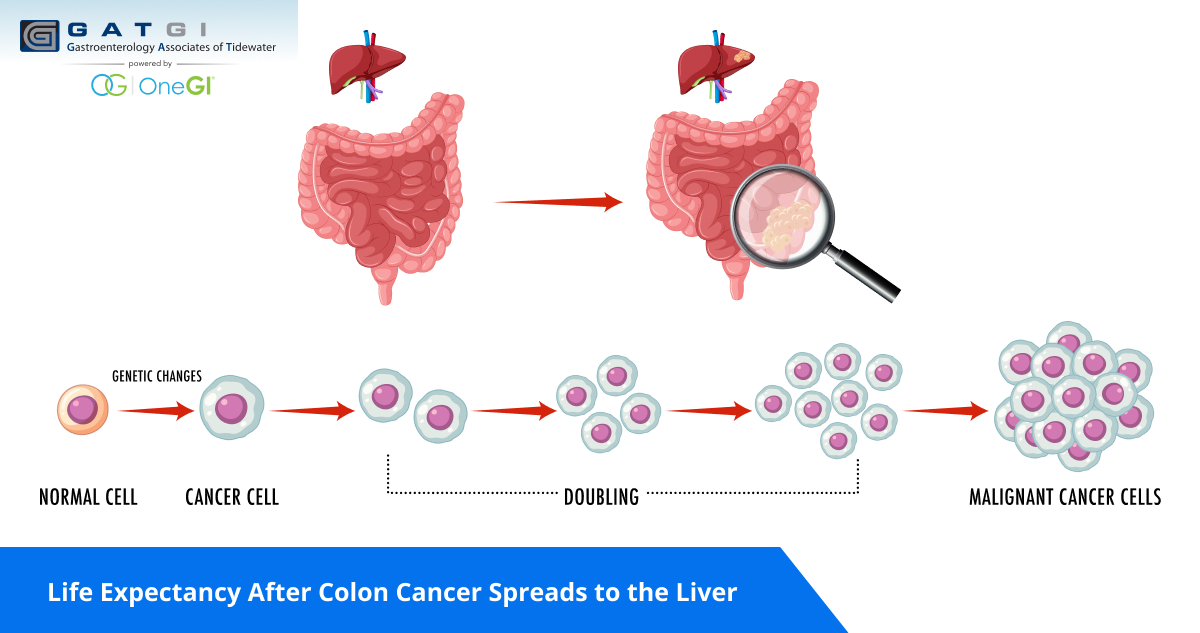
To understand why advanced technology is such a massive leap forward, we must first look at how colon cancer actually develops. The disease almost always starts with small, non-cancerous clumps of cells that form on the inner lining of the large intestine. Doctors call these growths polyps.
Over a long period, often taking anywhere from 5 to 15 years, a small percentage of these benign polyps undergo genetic mutations. These changes can transform them into malignant, cancerous tumors.
[Normal Colon Wall] ──> [Small Benign Polyp] ──> [Advanced Adenoma] ──> [Colon Cancer]
Because this process takes a long time, doctors have a unique window of opportunity. If an expert can spot a polyp and remove it while it is still completely harmless, the cancer is prevented before it even has a chance to start.
Common Risk Factors and Causes of Colon Cancer
Many different elements can influence your overall digestive health and increase your chances of developing tissue changes over time. Understanding these underlying triggers helps you make informed choices alongside your doctor to actively protect your well-being.
- Aging: The risk of developing cellular abnormalities increases significantly with age. Routine screenings traditionally focus on individuals after they turn 45 to 50 years old.
- Family History and Genetics: Inherited genetic traits or having close blood relatives who have dealt with colon polyps or colorectal cancer automatically elevate your baseline risk profile.
- Diet and Lifestyle Factors: Diets heavily reliant on red and processed meats, combined with low dietary fiber intake, place extra stress on the digestive tract. Physical inactivity and obesity also play documented roles in accelerating tissue inflammation.
- Inflammatory Bowel Disease (IBD): Chronic, long-term inflammatory conditions, such as ulcerative colitis and Crohn’s disease, cause continuous cellular turnover, making regular diagnostic surveillance vital.
The trickiest part of this condition is that early-stage polyps rarely cause pain, discomfort, or noticeable changes in your day-to-day health. This reality often leads people to ask a critical question: Can AI detect colon cancer before symptoms?
Yes, it absolutely can. With AI for early colon cancer detection, modern software can help identify tiny structural changes in tissue before a polyp becomes large enough to cause symptoms or serious concerns. This technology allows our GI doctors in Chesapeake, VA, to identify and eliminate the risk years before you ever feel sick.
Get Advanced Screening, Expert Care and Better Protection Against Colon Cancer.
Colon cancer is often preventable when detected early, and modern screening tools are helping doctors find potential concerns sooner. At GATGI, advanced technology and experienced gastroenterologists work together to provide thorough, patient-focused colon cancer screening.
- Early detection helps identify and remove precancerous polyps before they become serious concerns
- AI-assisted screening provides an additional layer of support during colonoscopy procedures
- Personalized screening recommendations based on your age, risk factors, and health history
Moving Beyond Traditional Screening Gaps
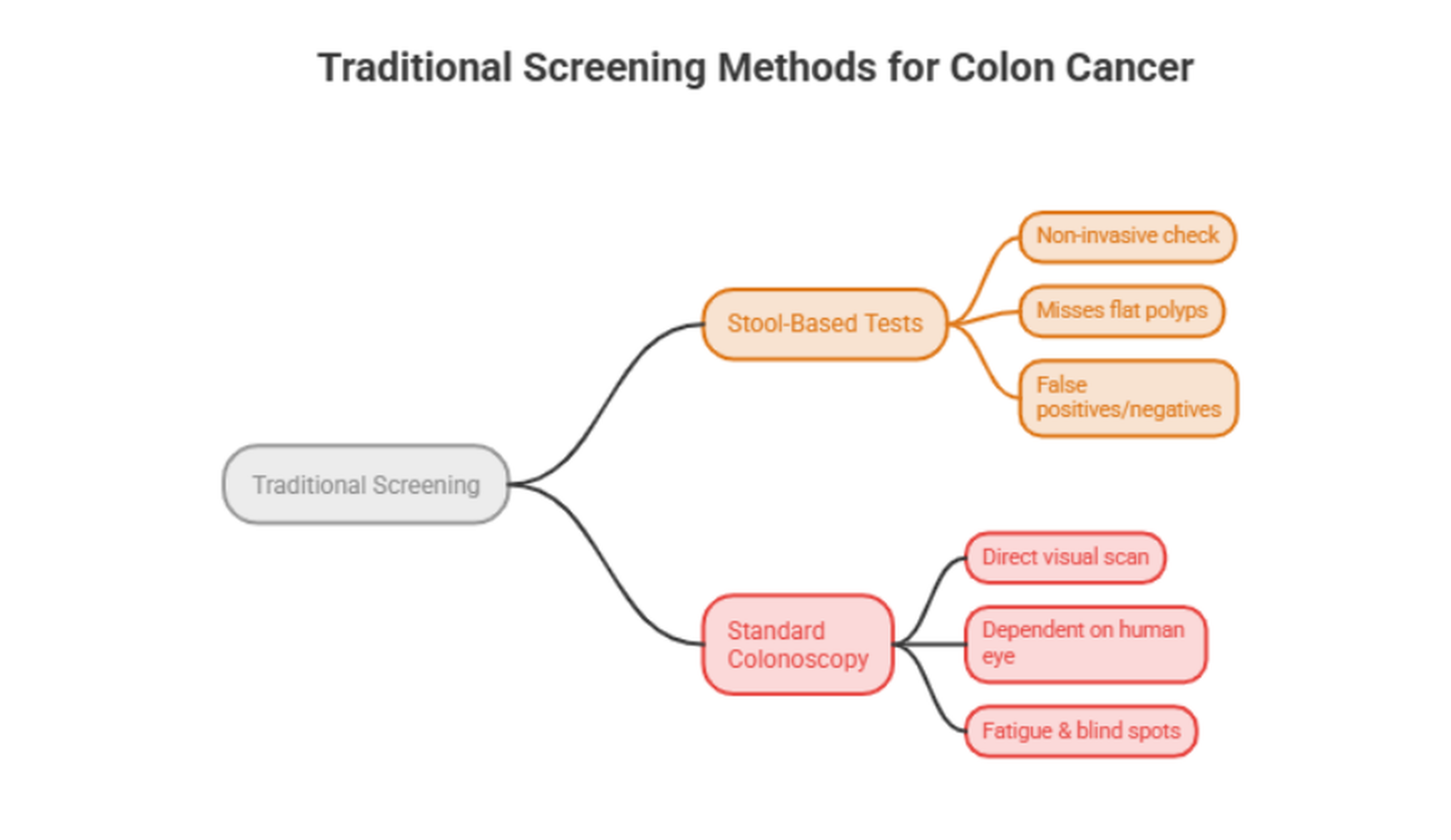
For decades, the medical community has used a reliable set of tools to identify signs of trouble in the digestive tract. These standard gastroenterology tests and procedures are broken down into two main styles:
Stool-Based Tests
These include options like the Fecal Occult Blood Test (FOBT) and the Fecal Immunochemical Test (FIT). They work non-invasively by checking a chemical sample of your waste for microscopic traces of blood or altered DNA strands. While they are highly convenient and can be completed right at home, they have clear limitations.
They cannot show a doctor where a problem is located, and they frequently miss smaller or flat polyps that simply are not bleeding at the time of the test.
Traditional Colonoscopy
This procedure remains the absolute gold standard for digestive health. A specialist uses a long, thin, flexible tube equipped with a high-definition camera and a bright light source to examine the entire inside wall of the large intestine.
The unmatched benefit of a colonoscopy is that it combines screening and treatment in a single session; if a doctor finds a polyp, they can pass tiny instruments through the tube to snip it out immediately. You can explore our complete list of clinical options on our procedures page to see how we carefully evaluate your digestive tract.
Why Standard Screening Methods Need an Upgrade
Even though a standard colon cancer screening is highly effective, it is inherently operator-dependent. This means the test’s thoroughness relies heavily on the individual doctor’s visual focus, experience, and the specific shape of the patient’s colon.
Human eyes, no matter how highly trained, have natural physical boundaries. Small polyps can hide behind the complex, natural folds of the intestinal lining. Some precancerous polyps grow completely flat or recessed against the tissue wall, mimicking normal anatomy.
Furthermore, performing multiple visual examinations back-to-back throughout a long workday can naturally lead to subtle fatigue. These clinical gaps created a pressing need for a more stable, digital layer of support.
How AI Detects Colon Cancer: A Second Pair of Eyes
When we discuss how AI detects colon cancer, it’s important to understand that the computer isn’t physically operating the equipment. Instead, think of it as a highly advanced, real-time visual assistant. This technology leverages specialized computer-aided detection (CADe) systems that seamlessly integrate with the existing endoscopy tower.
As the camera glides through the colon, the AI software analyzes the live video stream frame by frame, processing more than 60 images every single second. The system has been trained by studying tens of thousands of real medical images containing every imaginable type of polyp, lesion, and healthy tissue variation.
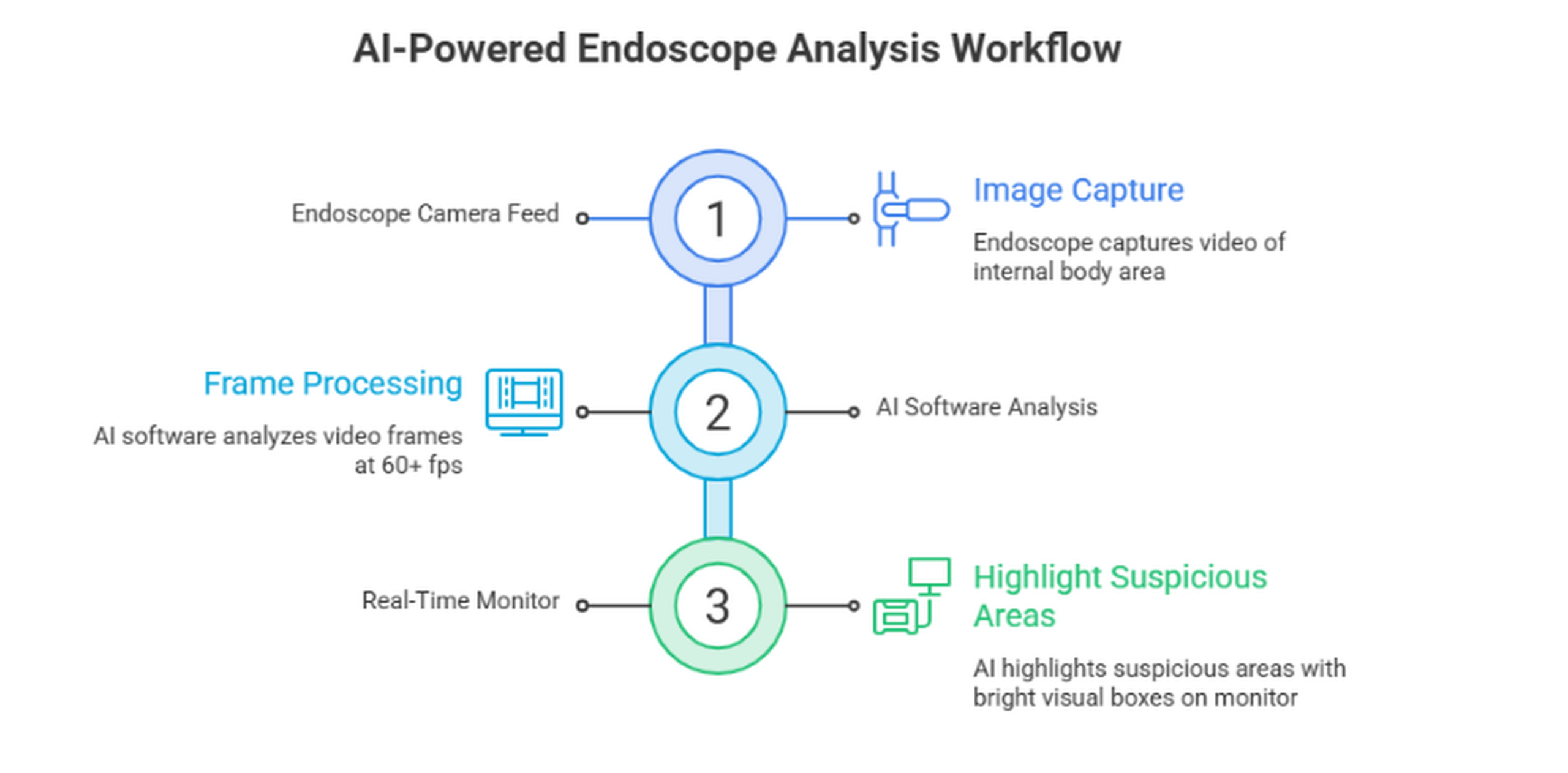
The moment an abnormality appears on the screen, even if it is just a minor change in texture, color contrast, or surface pattern, the AI instantly drops a bright visual bounding box right over the spot on the doctor’s monitor. It also emits a soft audio chime to draw immediate physical focus to that exact area.
This gives the experts a chance to pause, zoom in, wash away any residual fluid, and inspect the tissue with absolute care. By constantly scanning the entire visual field without a single moment of distraction, the role of AI in colonoscopy screening effectively eliminates the classic risks associated with human blind spots or momentary lapses in focus.
The Core Benefits: Can AI Diagnose Colon Cancer Accurately?
When individuals learn about this software, they often wonder: Can AI diagnose colon cancer accurately?
To answer this clearly, it helps to distinguish between detecting an abnormality and making a final diagnosis. The AI acts as an unmatched detection engine. It is exceptionally precise at flagging tissue that deserves a closer look.
| Evaluation Parameter | Traditional Screening | AI-Based Screening |
| Visual Accuracy | Relies entirely on human sight | Enhanced by algorithmic pattern analysis |
| Polyp Miss Rates | Higher risk for flat or tiny lesions | Drastically reduced via live visual highlights |
| Scanning Speed | Limited to human reaction time | Instantaneous processing of live video frames |
| Detection Quality | Shifts based on provider fatigue | Consistently stable from morning to night |
| Clinical Outcomes | Varies across clinical environments | Drives higher long-term survival rates |
Large-scale international medical trials have shown that utilizing computer-aided detection tools during a standard colonoscopy screening can reduce the rate of missed polyps by roughly 50%.
Furthermore, this technology boosts a metric known as the Adenoma Detection Rate (ADR). In the gastroenterology community, a doctor’s ADR is the ultimate measure of quality. Clinical studies confirm that for every 1% increase in a clinic’s overall ADR, a patient’s risk of developing an interim colon cancer before their next scheduled checkup drops by a solid 3%.
Early Signs of Colon Cancer AI Can Detect
While early polyps often remain hidden, advanced diagnostic software can detect subtle changes in tissue texture and shape long before the human eye can see them. Recognizing the subtle, early signs of colon cancer that AI can detect gives our medical team a massive advantage in stopping cellular growth at its earliest stage.
- Diminutive Lesions: Tiny tissue growths measuring less than 5 millimeters across that are easy to overlook.
- Sessile Serrated Adenomas: Flat, saw-toothed growths that match the exact color of healthy tissue and often hide under thin layers of mucus.
- Depressed Mucosal Changes: Small indentations or slight texture variations on the lining wall that indicate early cellular disruption.
Personalized Treatment and Risk Management
The impact of artificial intelligence extends well beyond the procedure room. Once the initial screening is complete, modern medical teams use predictive analytics to construct an intelligent, big-picture view of a patient’s long-term health.
By feeding lifestyle details, family medical histories, specific biopsy results, and past scan results into intelligent risk-assessment models, experts can move away from rigid, generalized guidelines.
Instead of telling every patient to come back in 10 years, the system simply helps doctors pinpoint who requires accelerated tracking and who can safely wait longer.
If a complex case requires intervention, AI models can cross-reference a tumor’s exact molecular traits against vast databases of global oncological outcomes. This data-driven strategy takes the guesswork out of planning subsequent steps, ensuring that therapies are tailored to how a specific growth behaves.
Myths vs. Facts About AI in Gastroenterology
Because this technology is advancing quickly, it is natural for patients to have questions or hold on to common misconceptions. Let’s clear up a few of the most frequent misunderstandings:
Myth: The artificial intelligence software is going to replace human doctors or make medical choices on its own.
Fact: The technology serves strictly as a companion tool. Your human specialist controls the endoscope, performs the actual polyp removal, and makes every single final clinical decision based on their years of medical training.
Myth: Having an AI system active during my procedure will make it hurt or change how it physically feels.
Fact: The software operates entirely within the computer processor and displays its data on the digital viewing monitor. It does not alter the scope’s physical design or the patient’s physical experience in any way.
Myth: Advanced computer tools will drive up the out-of-pocket cost of routine care to an unmanageable degree.
Fact: Over time, catching cellular changes early prevents the need for highly complex surgeries and intensive oncological therapies. This ultimately lowers the total cost of healthcare for families.
The GATGI Difference: Your Partners in Modern Digestive Wellness
While having access to cutting-edge artificial intelligence is an incredible asset in modern medicine, this technology can only do its job if you take the first step to look after yourself. At Gastroenterology Associates of Tidewater, we blend this advanced digital precision with true, patient-first compassion. Colon cancer remains one of the most preventable conditions found today, but success depends entirely on active, timely care.
If you are 45 or older or have a family history of GI issues, don’t put this off. Healthy individuals without complex medical issues can skip the initial office visit entirely by using our streamlined open-access program.
Get in touch with our caring, expert gastroenterology staff in Chesapeake, VA, to walk you through your options. Take a proactive role in protecting your long-term wellness by arranging a comprehensive screening or scheduling a colonoscopy with our team at GATGI today.
Frequently Asked Questions
How exactly does AI improve the overall quality of a colonoscopy screening?
AI technology acts as an automated, real-time assistant, analyzing more than 60 video frames per second. It instantly alerts the doctor to subtle, hard-to-spot tissue changes, significantly boosting the adenoma detection rate.
Can AI software differentiate between a benign polyp and a cancerous lesion?
While advanced software can highlight abnormal visual patterns and surface textures for the physician, it does not provide a definitive diagnosis. The doctor must physically remove the tissue and send it to pathology.
Does an AI-assisted colonoscopy require any special preparation compared to traditional methods?
No, the preparation remains identical. Patients follow a standard liquid diet and are prescribed a laxative regimen to clear the colon wall, allowing the software’s digital algorithms to visualize the tissue.
Will insurance cover the use of artificial intelligence during my routine procedure?
Yes, because the technology integrates directly into standard endoscopy equipment as a quality-enhancement tool. It is typically billed as part of your standard preventive or diagnostic colonoscopy, with no extra out-of-pocket fees.